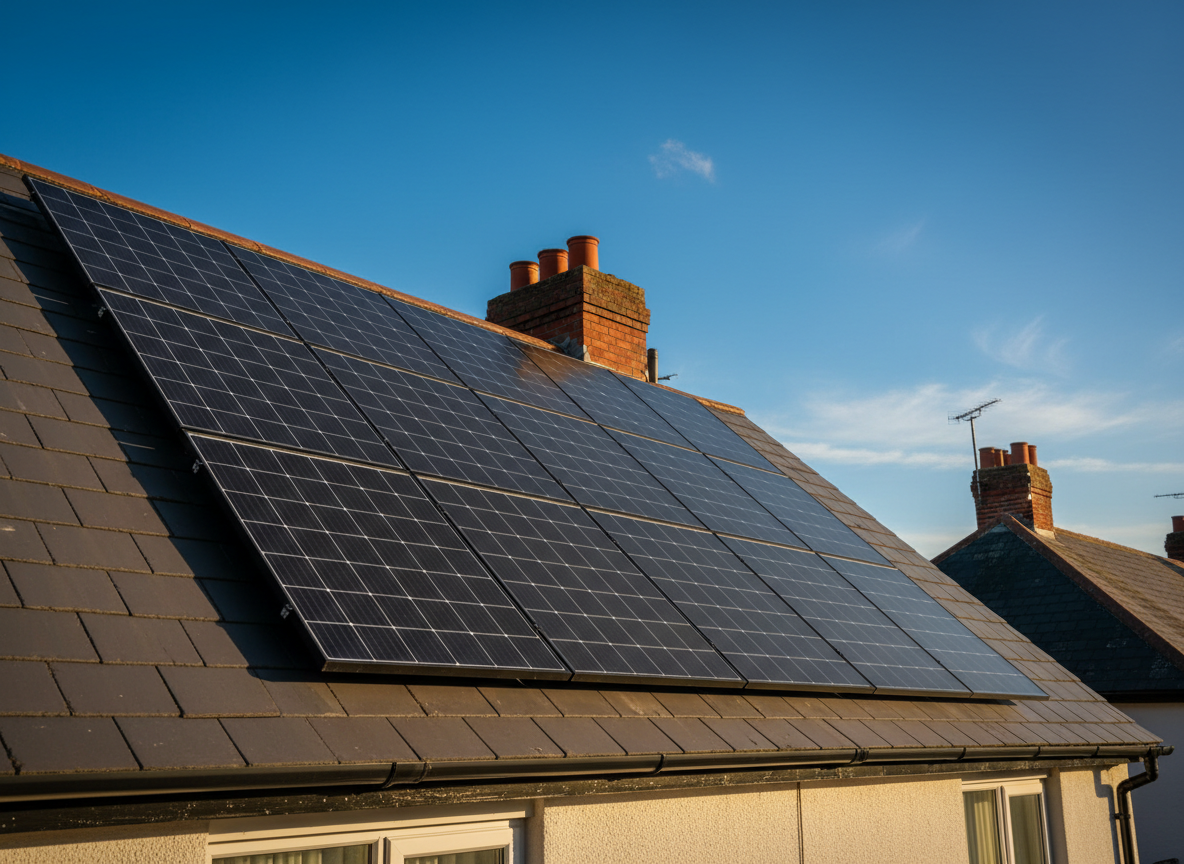
How Solar Panels Work — Even on Cloudy Days
Solar panels convert daylight into electricity, helping you cut energy bills and earn money by exporting energy back to the grid.
Solar Energy in 3 Simple Steps
1. Photovoltaic Effect
When sunlight hits the solar cells in a panel, it excites electrons in the semiconductor material (silicon). This movement of electrons generates a flow of electricity known as direct current (DC).
2. DC to AC Conversion
The DC electricity generated by the panels isn't compatible with most home appliances. An inverter converts it to alternating current (AC) that powers your home.
3. Power Distribution
The AC electricity powers your lights, appliances and devices. Any excess energy can be sold back to the grid via the SEG scheme, or stored in a battery for later use.
Do They Work in the UK?
Despite the UK's cloudy reputation, solar panels work efficiently year-round. They generate power from daylight, not direct sunshine — meaning they still produce energy on overcast days.
Regional differences exist — southern England gets slightly more sun than Scotland — but the difference is only around 15-25% for a typical 4kW system.
The UK receives between 850 and 1,200 kWh of solar energy per square metre per year. A standard 4kW system can produce 3,400 to 4,200 kWh annually — enough to cover a significant portion of a household's needs.
Battery Storage
Adding battery storage lets you save excess solar energy for evening use or peak hours. Home battery storage starts from around £4,000, with the average installation at £8,300 in 2025. Combined with solar panels, it maximises your savings and energy independence.